
Quarantine Update | The MECQ Rules
Two months under community quarantine, Filipinos are now braving the new norm. So many questions were buzzing about the MECQ. What is MECQ? How is it different from ECQ? What new rules will the MECQ entail? We rounded up the general guidelines for you.
Following the outbreak of COVID-19, the whole island of Luzon was put under Enhanced Community Quarantine (ECQ) last March 16, 2020. To say that the Filipino lives have changed is an understatement: public transport was banned, schools and malls were closed, and routines were disrupted. The future was uncertain, but help is underway for sure.
Over two months since the whole island of Luzon were placed under the ECQ, and the government is moving slowly towards a new norm. Metro Manila, Laguna, and Cebu have been situated under Modified Enhanced Community Quarantine (MECQ) last May 16, 2020. Two months under community quarantine, Filipinos are now braving the new norm. So many questions were buzzing about the MECQ. What is MECQ? How is it different from ECQ? What new rules will the MECQ entail? We rounded up the general guidelines for you:

Source: Rappler.com (May 15, 2020)
Who can go out?
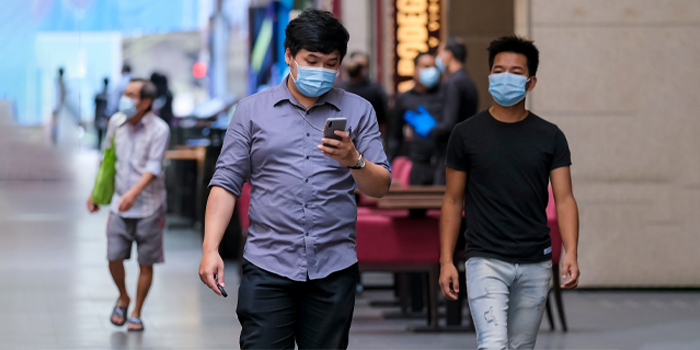
Staying at home is still highly encouraged and should be taken seriously. However, under MECQ, people are now allowed to leave their homes but only to get essential items. People who work in industries deemed by the government to be essential are also allowed to go out. While mass gatherings are still banned, people can now walk or jog as long as social distancing and health protocols are followed. Senior citizens with health complications are encouraged to stay at home.
What businesses can operate?
Malls, essential industries (hospitals, clinics, and pharmacies), and food establishments can now operate under MECQ but they must implement skeletal force, follow strict social distancing, and put health protocols in place. Such protocols would be wearing face masks, regular body temperature monitoring, and sanitation. Food establishments will only accommodate take out and delivery. Industries who are not deemed essential like spas, gyms, and cinemas will remain closed under MECQ.
How do we travel under MECQ?
Public transportation such as the LRT, MRT, and PNR, and Public Utility Vehicles (PUVs) and tricycles are still banned under MECQ. Private vehicles and company shuttles are allowed as long as its two persons per row. Bicycles, motorbikes, e-scooters are allowed with one person maximum. Domestic flights and inter-island travels are still banned while inbound flights are monitored and regulated.
While the MECQ is relatively more lenient than the ECQ, the law will still be applied to all. People who refuse to follow the strict guidelines will be charged under Section 9 of Republic Act No. 11332. Violators will be disciplined for “non-cooperation of persons or entities affected by a health event of public concern” and/or Article 151 of the Revised Penal Code in line with the “resistance and disobedience to persons in authority.”
It is worrisome that COVID-19 cases are rising, but it is also important to note that the recovery rate is also slowly catching up. More importantly, "Bayanihan" is still alive among the Filipinos. The new norm entails new rules and these rules must be followed to preserve our physical health. There is still an urgent need to stay at home despite MECQ as the Philippines is still on the way to flatten the curve.