
Strike a Pose | Isometric Exercises!
Isometric exercises are a nice and easy way to get in a workout for people who can't find the time to do exercises in-between idle time. Today, let's talk about the benefits of isometric exercise as well as some examples you can try out at home.
If you've walked into a gym, you are bound to see at some point a very muscular gentleman posing in front of a mirror. Don't go assuming he's just boosting his ego (although that is a possibility), it's also possible that he's just doing some isometric training! You might ask, "How is posing an exercise? It doesn't use any equipment or heck, any movement at all!" Well, if you're that curious, stick around and let's talk about the science and benefits of isometric exercise!
What are Isometric Exercises?
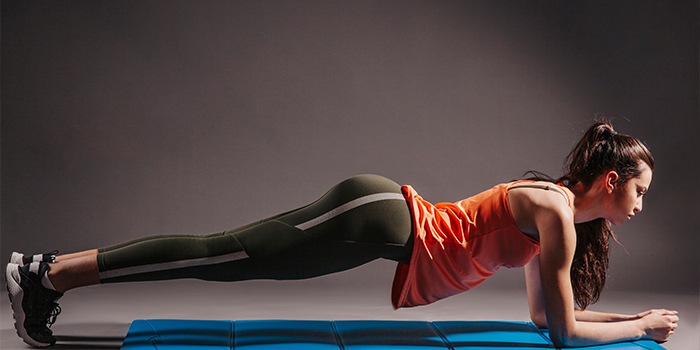
Unlike most exercises that involve a lot of repetitive motions and sets, isometric exercise actually involves no motion at all. Isometrics is what trains your muscles to expand and contract without, well, "moving a muscle". One isometric exercise that you may actually already be familiar with is planking.
Benefits of Isometric Exercises:
- Muscle Endurance - Due to the lack of motion, your muscles are forced to flex in one position for a lengthy amount of time. This forces your muscles to be stronger and less prone to pain.
- Lowers Blood Pressure - Isometric exercise significantly decreases blood pressure, especially for healthy adults aged 18 to 30 years old. Specifically, those who trained with isometrics for eight weeks and longer.
- Lean Muscle Improvement - Isometric exercises encourage the growth of lean muscles. Lean muscles rely more on calories than fat as an energy source, so this is why non-motion exercises are effective in growing them.
- Efficient Strength Training - Isometric exercises are meant to be done in short and intense bursts. Holding your muscles in place activates your muscles more than any other workout.
- Utility - Isometrics require no motion and no equipment, so you can basically do it anywhere. Heck, you can just flex your muscles and legs while sitting at work, and that would count as a form of isometric training (although not optimized).
Isometric Exercises
Now, let's get to some exercises you can do with this training method.
- Palm Push - Clap your palms together and push. Use about 60-80% of your strength and push both palms against each other for 15 to 30 seconds. This exercise activates your back and pectoral muscles.
- Bicep Pull - Hold your right arm out in the same pose you would a bicep curl. Use your left hand to hold down the wrist of your right hand (your fingers on the left hand should be facing downward). From here, pull up your right arm and push it down at the same time with your left hand. Hold this pose for 15 to 30 seconds, and release. This workout activates your biceps.
- Muscle Flex - This one is actually quite simple. Just strike any pose you like and activate the muscle groups you want (i.e. biceps, back) and hold the pose for 10 to 15 seconds, using 60 to 70% of your strength. This is good for waking up your muscles before any workout.
- Planking - No article about isometric exercise is complete without talking about planking. Planking is done by lying down on your front, with a straight back and your elbows supporting your upper torso. Essentially, it's like you push up and simply don't go down for an entire minute. Keep that core tight and your legs and back straight as an arrow. It's painful, but that means it's working.